Rivers, Forests, Women: How The Hindu Society Often Defiles And Destroys What It Claims to Love And Revere
There are always a dozen ways to look at things. Some of those ways lead to change that is beneficial to larger people and some to inaction and continued benefit of few. The ongoing project or rather ghastly movement to cut as many trees as possible, to clear as much forest land as possible remains one such thing which is being looked at and discussed in very many ways. But from most discussions, one key angle and detail is getting missed out or perhaps overlooked by the very people who surely have a stake in status quo. The political movement that most loudly claims Hindu reverence for nature has itself overseen or defended many of these projects.
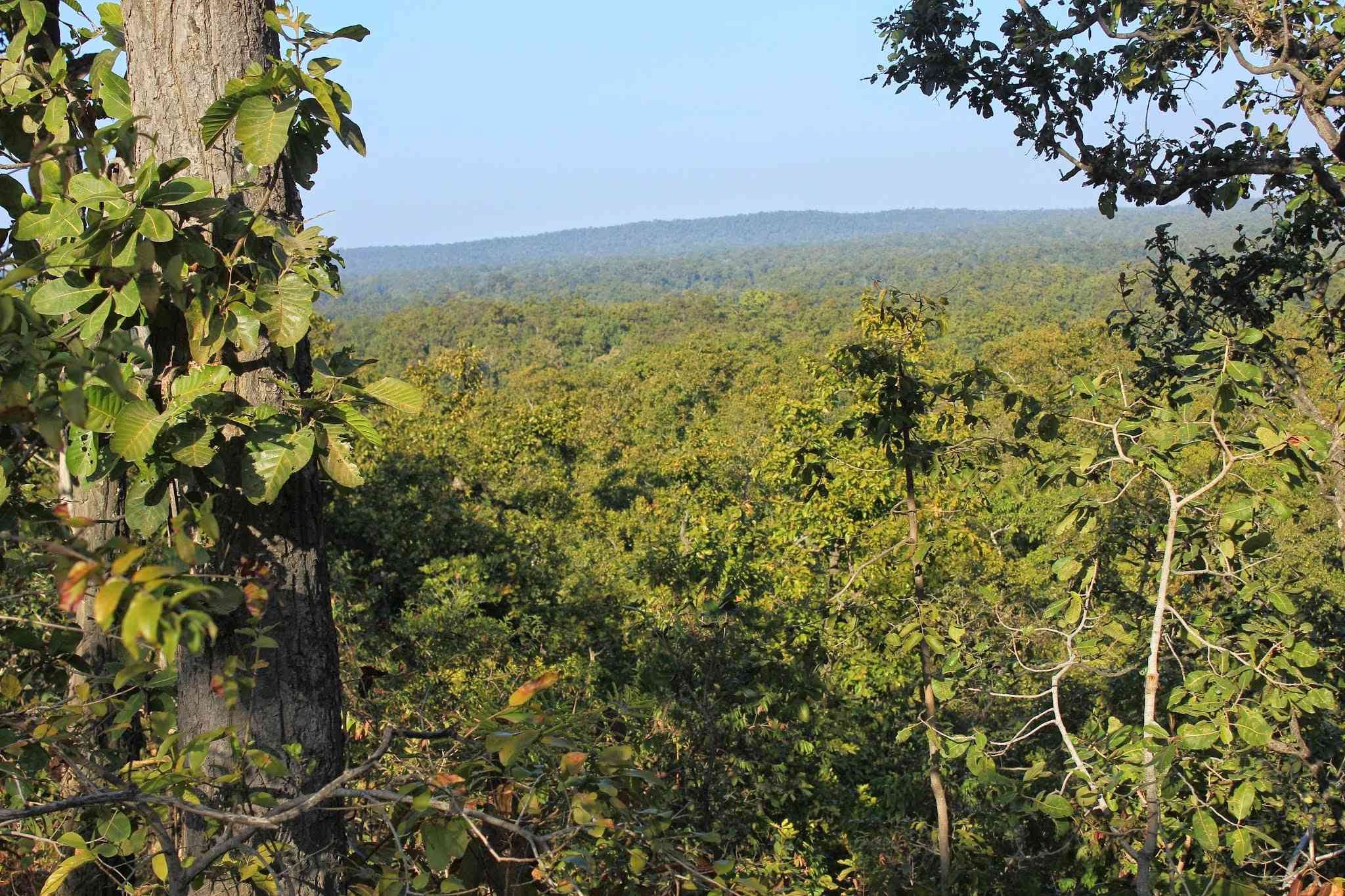
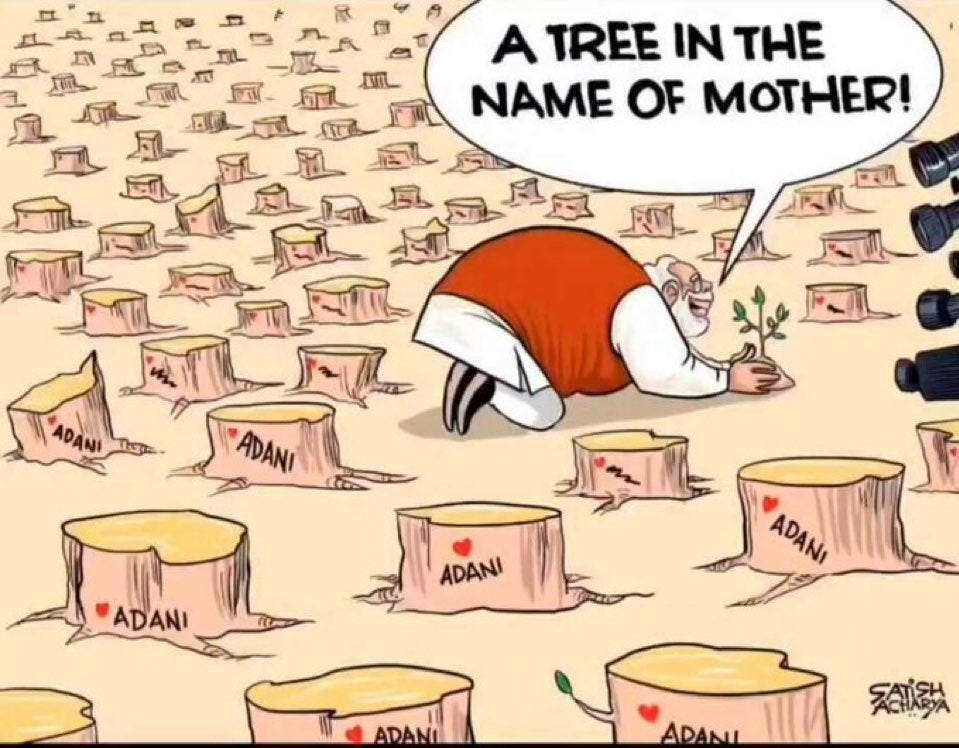
Hasdeo Arand is one of India’s largest contiguous forest regions, where the Narendra Modi government has marked 95,000 plus trees for chopping. Many have already been chopped along with 800 hectares of forest being diverted for mining activities that will benefit his friend and donor Gautam Adani, in whose plane Mr Modi campaigned for various elections in his early years before he became India’s Prime Minister. This close relationship between Narendra Modi and Gautam Adani is evident in how projects get rewarded to his company or how his rivals just before being takenover from Adani receive notices from government agencies. We are in fact, in the 12th year of his payback time. Gautam Adani was born in a Gujarati Jain family. People who follow Jainism claim that they do not harm any organism, they do not even eat plant products that are grown underground so as not to harm soil organisms. Recently, during Eid, they rescued animals slated for Eid sacrifice. On the contrary, I could not find any major Jain organisation publicly opposing Adani’s Hasdeo projects. He is destroying such a large forest and with it not just killing tiny soil organisms but also large animals as well who will not just lose their home and habitat but also their life as forests get cleared.
In 2023, Chhattisgarh got a new government headed by Narendra Modi’s party, and soon followed a government “decision approving forest clearance for a mining project — that potentially paves the way for the felling of 4.5 lakh trees.” Narendra Modi, RSS and BJP all together claim to represent and protect Hindu interests. There is an overarching belief among Hindus that they respect and, in fact, pray to Mother Nature and trees. And yet the Hindu-Hriday-Samrat, the most loved and greatest Hindu on planet earth right now, is doing everything under his power to destroy the very things his religion claims to revere. And despite these anti-religious activities, he gets re-elected claiming he is their only hope in protecting their religious interests. Which begs the question, what exactly are the Hindu religious interests and how do they align with making money for Adani by hook or crook?
More read: Rajasthan judge who ruled against Adani-led firm transferred the same day
Forests of Gadchiroli are largely occupied by Naxalites, or so it was until recently, when the government cleared these forests from their control. Some 80 Naxalites were hunted down by government forces. These forests have been inhabited for ages by tribals and adivasis. Rightfully, it is to them that these jungles belong. But who were these forests land given after the Naxal clearance? I mean, why was the government spending so many resources, money and also bodies of armed forces and police? Why was the government so invested in clearing these forests of Maoists? Was it to bring development to locals? Nope. The government has gifted the forest and mines under it to the Lloyds group owned by the Sharmas. Some one lakh trees are cut from the area to help them mine the resources. If the forest could vote, surely the trees would side with the Naxals and not the Sharmas and Hindus who claim to revere and pray to Mother Nature but are always at the forefront of cutting them down at short notice.
Char Dham Highway Project is more direct and so more absurd in its goal and how that goal is being achieved. It is akin to killing the poor by driving over them to reduce poverty. It will rightfully reduce the number of poor and statistically achieve the goal of reducing poverty. The union government’s ambitious Char Dham road project — that will link the shrine towns of Badrinath, Kedarnath, Gangotri and Yamunotri through widening and strengthening of Himalayan roads — is leading to the felling of over 56,000 trees in the ecologically fragile mountain ranges. Hindus worship trees, Hindus also worship statues inside a temple and now to reach these temples they need more wider roads because existing roads are inconvenient to them or are getting them to these temples with slight delays and so as to reach sooner they are now killing the living trees who they say they also worship. Make sense of it.
It’s comic how the most trees are cut by Hindus (and a Jain) in India — Modi, Adani, Fadnavis, etc. — who also claim to worship trees, nature and so on. Muslims and Christians who somehow don’t claim to do tree worship end up not featuring on forest-levellers list. Same with rivers — Hindus claim to worship it but also pollute it the most, while the Christian world somehow manages to have clean rivers. This contradiction resembles India’s continuing refusal to criminalise marital rape - an institution that publicly celebrates sacred marriage, a religion that tomtoms its female gods while also legally permitting what many democracies recognise as rape. Rape is exploitation in a way, and in marital rape, you do it to your partner, someone you claim to love, someone you vowed to protect and guard in front of a large crowd in a wedding involving religious invocations. So if you think about it, it is customary in India to abuse or exploit whatever you claim in public to worship or love about.
From Varanasi to Kedarnath to Gangotri, most of the religious sites have had major infrastructure overhauls aimed at attracting more tourists and arranging amenities for these new arriving tourists. We are, in fact, building and building to attract tourists and give rise to tourism at these places. It is expected of governments to do this to raise revenue for the state. It only sees profits like any corporation. But the BJP government was supposed to be a government of the Hindus elected to protect and further Hindu interests. It was understood that these were people who understood religion, respected it and were here to protect the ancient heritage and culture around it. What is the purpose of religious places? What did you hear before 2014 from people who visited or desired to visit Varanasi or Haridwar?
1,700-1,800 trees are proposed for removal in the Tapovan area in preparation for the Nashik Kumbh Mela. Similarly there’s the case of proposed felling of 1,12,722 trees for the proposed 111-km Kanwar Yatra route along the Upper Ganga Canal in Uttar Pradesh. Both are purely Hindu religious events and trees are being cut for what is essentially not a permanent structure. The trees are cut here to make the devotees comfortable when they visit these areas. The idea behind is that the devotees have problem with trees here and they are inconvenienced by presence of trees while performing their religious functions. The religious functions are of course to please the gods and by that logic the inherent understanding is cutting of trees does not displease gods. But Hindus, we are repeatedly told love trees and also worship nature. The fine print here though is that this worship requires killing of those very trees they worship.
If you look closely everything Hindus tomtom about loving and worshiping in fact gets destroyed or damaged the most — think of trees for Kumbh Mela or Chardham yatra or River Ganga or the women when you think about how Hindu India has successively pushed back against criminalising marital rape while Muslim Pakistan criminalised it way back in 2006. So when a Hindu starts to worship anything or anyone, be really worried for their love is evidently lethal and devours the very thing it proclaims to worship.
If Hindu civilisation truly sees rivers, forests and mountains as sacred, then the question is not whether India should develop or not. The question is how are we developing and why development so often begins by destroying precisely those landscapes that Hindu tradition describes as divine. If reverence for nature is central to Hindu identity, should a government claiming to defend that identity not be held to an even higher environmental standard than any other?


Comments
Post a Comment